
Buyer Protection
How to Buy Iced Out Jewelry Without Getting Scammed
The real questions to ask before you pay for a chain, grill, or watch — so you know exactly what you're getting.
Jul 1, 2026
5 min read
Glacier Journal
Learn the difference between shine and value before you buy.
Glacier Status guides are written to make the buying process clearer: what to ask, what to avoid, and how to choose materials that match your budget and the way you wear jewelry.
"Iced out" is a look, not a material
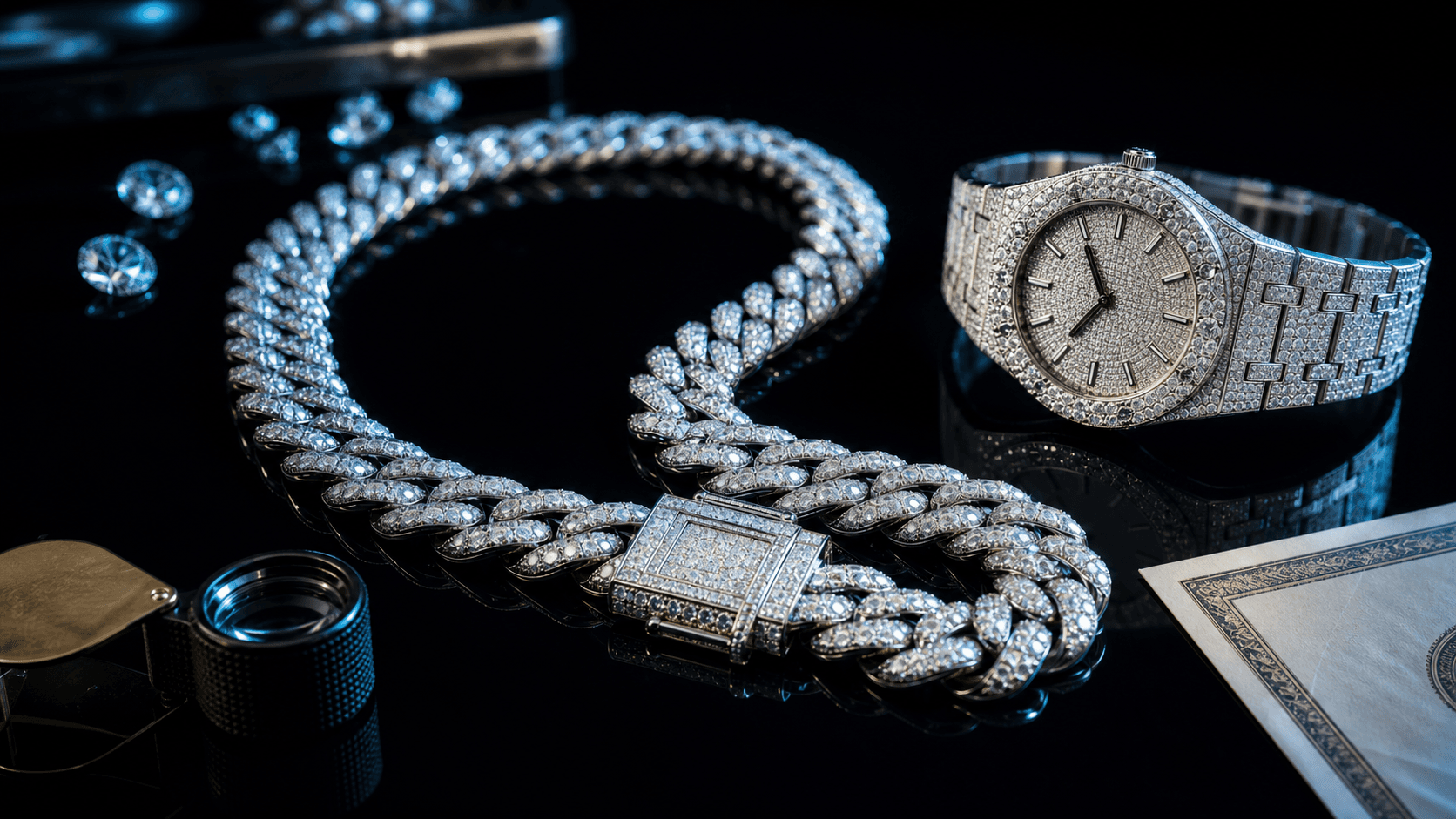
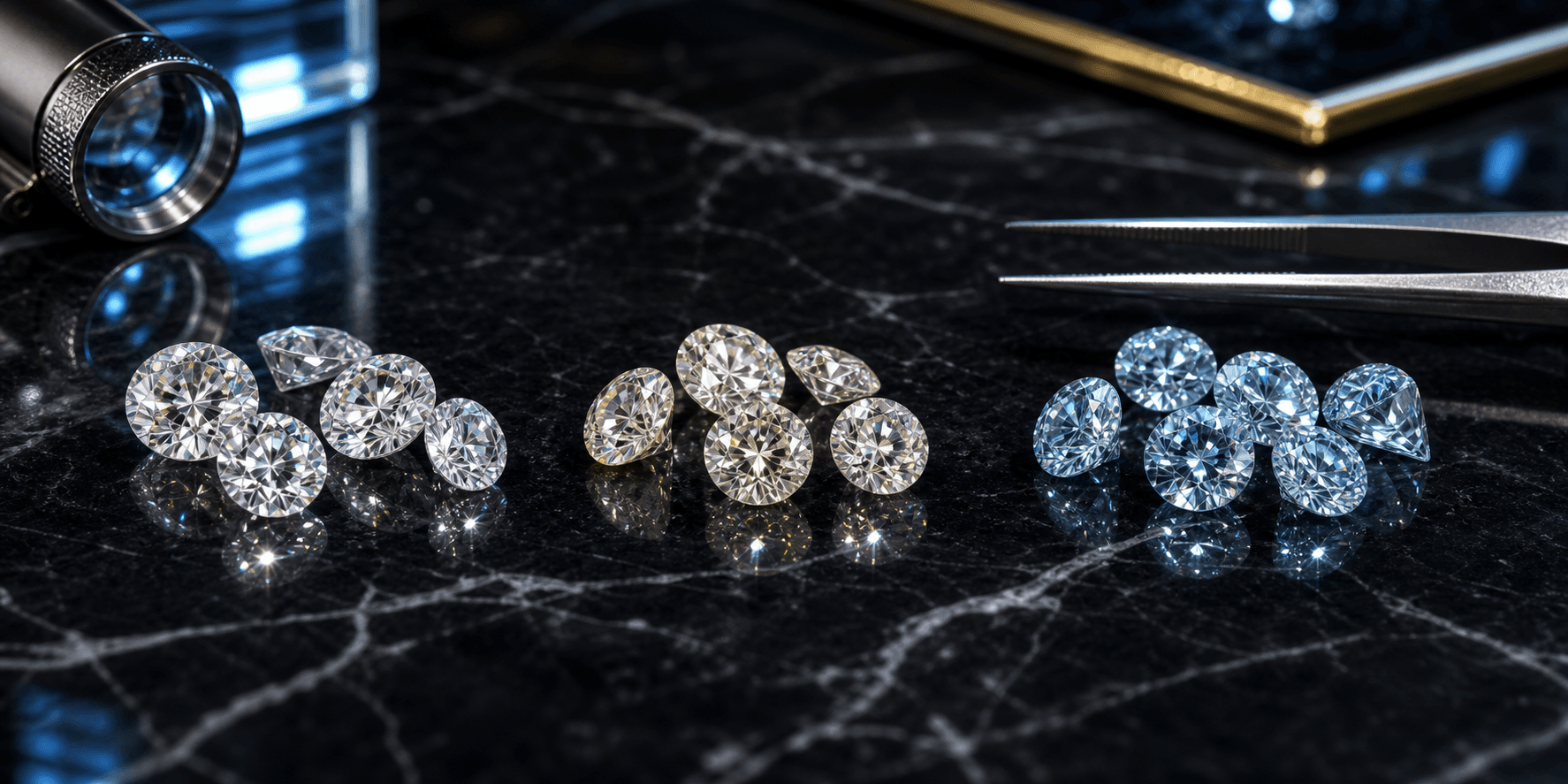
Iced out describes a style — stones set edge to edge for maximum shine. It says nothing about what's actually in the piece. The stones could be natural diamonds, lab-grown diamonds, moissanite, or cubic zirconia. The metal could be solid gold, gold-filled, gold-plated, or base metal underneath. Two pieces can look identical in a photo and be worth wildly different amounts. Before you pay for anything, get the seller to tell you plainly what the stones are and what the metal is — not just that it's "iced out" or "looks real."
Get it in writing, not just a promise
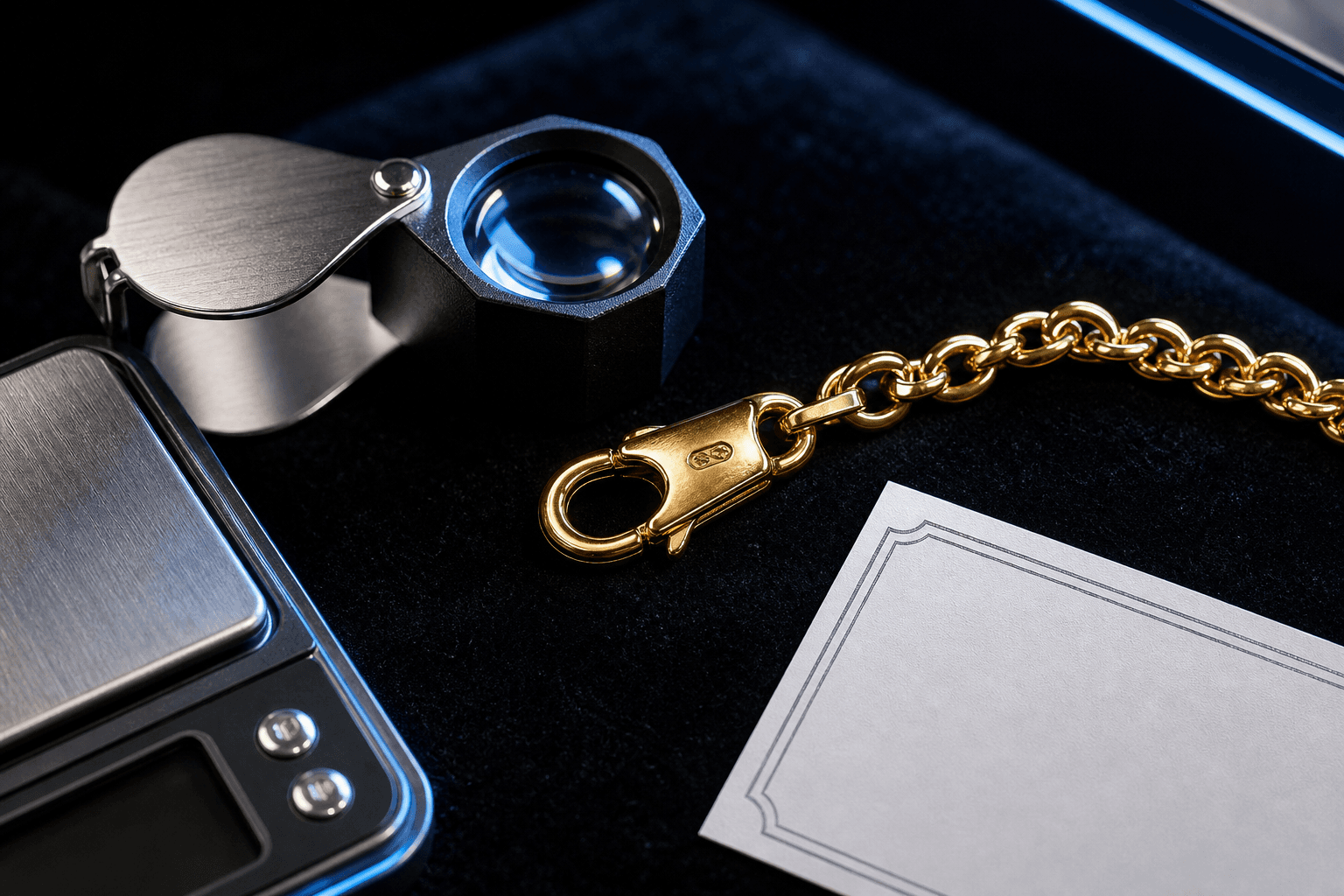
A serious seller can tell you the metal type and karat, the stone type, and the total carat weight or stone count — and will put it in writing, on the invoice or a certificate, not just say it out loud. If someone won't commit any of that to paper, that's the answer to whether the piece is what they're claiming it is. This isn't about distrust for its own sake — it's the same reason you'd ask for a receipt on any purchase this size.
If the price feels impossible, it usually is
Natural diamond pieces cost what they cost because of the stones themselves, not just the labor. A heavily iced piece priced far below what natural stones of that size would cost is almost never a lucky deal — it usually means the stones aren't what's being implied, or the metal isn't solid. Moissanite and lab-grown pieces are genuinely more affordable and can look incredible, and there's nothing wrong with buying them — the problem is only when a lower-cost stone is sold at a natural-diamond price without saying so.
Check the metal, not just the shine
Solid gold and silver carry a hallmark stamp — something like 10k, 14k, 18k, or 925 — stamped directly into the metal. Plated pieces should be labeled as plated, clearly, not sold as solid. Ask to see the stamp, or ask the seller to confirm it's there. Weight matters too: solid metal has real heft. A piece that feels unusually light for its size is worth a second question before it's a third purchase.
The best sign is a seller who explains trade-offs
Every stone and metal choice is a trade-off between look, durability, and price — there's no single "right" answer for every buyer. A seller who walks you through those trade-offs honestly, including pointing you toward a cheaper option when it makes sense, is worth more than one who just pushes whatever's most profitable that day. That's the difference between a purchase and getting scammed.
Commission Guidance
Need help choosing the right piece?
Send your idea, budget range, and reference photos. Glacier Status can help match the stone, setting, and metal to the way you want the piece to look and wear.
Start Inquiry